
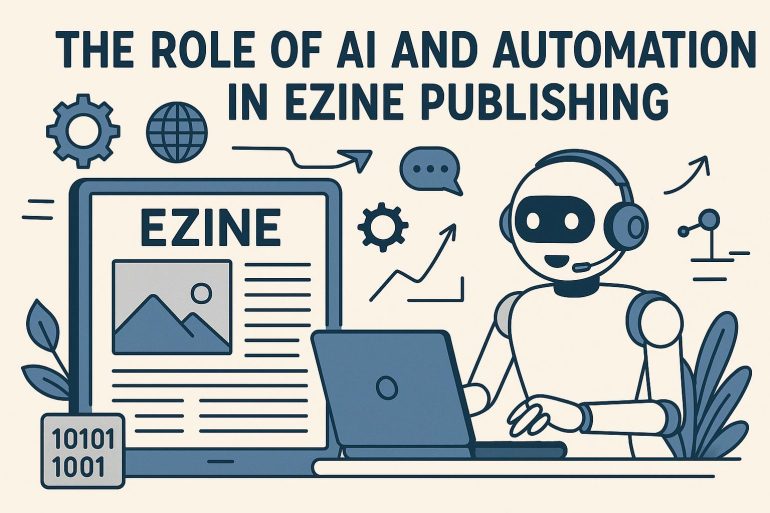
Introduction to AI and Automation in Ezine Publishing
In recent years, the role of AI and automation has expanded across various industries, including ezine publishing. Ezines, as digital magazines or journals, provide content tailored to specific interests for a diverse audience over the internet. Leveraging AI and automation can significantly enhance the efficiency and reach of these publications.
Content Creation and Curation
AI can assist ezine publishers in creating and curating content by analyzing trends and reader preferences. Machine learning algorithms can analyze vast amounts of data to identify what topics are gaining traction. This information allows publishers to produce content that resonates with their audience.
An example of this is the use of natural language processing (NLP) tools, which can help in generating articles, summarizing content, and even converting existing text into scripts for audio or video. Advanced algorithms can also suggest article metadata, making it easier for readers to find relevant content.
Personalization and Audience Engagement
One of the key benefits of incorporating AI in ezine publishing is personalization. AI systems can analyze reader behavior and preferences to offer personalized content recommendations. This tailored approach keeps readers engaged and increases their likelihood of returning to the publication.
Moreover, chatbots powered by AI can facilitate real-time audience interaction, answering queries, and providing additional information. This level of engagement fosters a deeper relationship between the publisher and its audience.
Design and Layout Automation
Automation tools can streamline the design and layout process in ezine publishing. Sophisticated design software can apply uniform styles, adjust layouts, and optimize formatting across different devices, ensuring consistent readability. This reduces the workload on human designers, allowing them to focus on more creative aspects of publication design.
Data Analytics and Feedback
With AI-driven analytics, ezine publishers can gain insights into reader behavior and preferences. These insights aid in making informed decisions about future content strategies. Automated systems can track metrics such as click-through rates, time spent on articles, and reader feedback.
Integration of feedback loops helps in refining content strategies. A publisher can use this data to adjust their offerings, catering more effectively to their target audience’s interests.
Challenges and Considerations
While AI and automation offer numerous advantages to ezine publishing, they also present certain challenges. The initial implementation of AI systems requires investment in technology and training. Additionally, reliance on AI for content creation must be balanced with human oversight to ensure quality and creativity are not compromised.
Ethical considerations also come into play, especially regarding data privacy. Publishers must ensure compliance with data protection regulations to safeguard reader information.
Looking Ahead
As AI technology continues to evolve, so will its applications in ezine publishing. The potential for increasingly sophisticated tools promises further advancements in personalization and content quality. Publishers who effectively integrate AI and automation will likely see improved engagement levels and reader satisfaction.
For more information on this topic, please refer to resources such as ResearchGate and MediaRadar, which provide in-depth analysis and case studies.
Deep Diving into AI and Automation Features
To truly appreciate the impact of AI and automation in the world of ezine publishing, it’s important to delve into the various features these technologies offer. From user data processing to efficient content management, AI and automation serve as pivotal forces driving the evolution of digital publications.
The Role of Machine Learning in Content Analysis
Machine learning is at the heart of AI’s content analysis capabilities. By parsing through extensive datasets derived from user interactions, machine learning models can paint a comprehensive picture of trending topics and emerging interests. This is vital for ezine publishers aiming to stay ahead of the curve by producing contemporary and appealing material for their readers.
Besides helping in understanding the type of content consumers are interested in, these algorithms can predict future trends by observing patterns over time. Such insights not only assist in crafting engaging articles but also help in strategically planning content schedules and marketing campaigns.
Natural Language Processing: A Game Changer
Natural Language Processing (NLP) stands as a game changer in content creation and refinement. This AI branch empowers publishers with tools that facilitate the generation of human-like text, transcending simple grammar checks to intricate syntactical and semantic analyses. NLP can convert text into multiple formats, ranging from text summaries to audio scripts, which widens the medium through which content can be consumed.
NLP’s utility extends into multilingual translation, allowing ezine publishers to widen their reach globally. Seamless language translation fosters a truly inclusive reading environment, breaking past linguistic barriers and engaging a wider audience.
Enhanced Personalization Through AI
The quest for enhanced personalization is largely driven by the need to capture a more loyal and dedicated readership. Advanced AI systems create user profiles through the aggregation and analysis of behavioral data points. These systems track reading habits, preferred topics, and interaction timings to tailor content suggestions and notifications accordingly.
Moreover, by learning and adapting at an individual level, AI enhances the reader experience, increasing both engagement time and satisfaction. For publishers, this personalization translates to sustained readership and a robust community around their ezine offerings.
Automation in Ezine Design and Layout
Advancements in automation have revolutionized the design and layout aspects of ezine publications. AI-powered design tools can suggest aesthetically pleasing layouts, color palettes, and font arrangements, maintaining a harmonious blend of visual appeal and digital accessibility across a variety of devices.
Further, these tools are adept at responding to user data that indicates prevalent device usage patterns, adjusting layouts for optimal performance on the commonly used devices among the readership. Consequently, ezine publishers experience reduced overheads concerning iterative design processes, allowing the human workforce to concentrate on creative endeavors like broad conceptualization and artistic direction.
AI-Driven Analytics
Analytics plays a crucial role in measuring the success of publication strategies. AI advances this field by delivering real-time insights that can be acted upon to continuously improve content offerings. Through AI-driven analytics, ezine publishers can dissect user engagement rates, content performance metrics, and interaction statistics with precision.
Additionally, feedback loops enabled by real-time analytics offer dynamic insights into reader perceptions and expectations. This empowers publishers to adjust their editorial strategies dynamically thus refining their approach to better suit the target demographic.
Navigating the Complexities of AI Integration
The integration of AI into ezine publishing, while beneficial, is not devoid of complexity. Initial implementation hurdles include the substantial investment in new technologies and necessary workforce training. Organizations often need to bridge knowledge gaps among their staff to maximize the utility of AI and automation tools fully.
Moreover, AI’s capability for content generation must be leveraged with caution. Overreliance on automated systems might stifle human creativity and result in monotonous or uninspired content, straying from the unique voice publishers aim to maintain. Thus, collaboration between human creativity and machine efficiency is essential.
Ethical and Privacy Challenges
As AI handles vast troves of user data, it raises pertinent ethical and privacy concerns. Publishers need to vigilantly ensure data collection aligns with stringent privacy regulations to protect reader information. Transparent data usage policies and robust cybersecurity frameworks are instrumental in maintaining trust amongst users.
The focus must lie in creating an equilibrium between powered personalization and safeguarding personal data. Unlocking AI’s full potential aligns with maintaining ethical standards, ensuring that advancements don’t come at the cost of user privacy.
The Road Ahead in Ezine Publishing
Positioned at the frontier of technological innovation, AI continues to shape the future of ezine publishing. As algorithms grow increasingly sophisticated, opportunities for deeper personalization, expedited content creation, and more engaging reader experiences come within reach. Publishers navigating this transformative landscape stand to gain through improved operational workflows and captivated audiences.
In conclusion, embracing AI and automation proffers an opportunity to enhance ezine endeavors. As technology continues to advance, so will the areas of application, continuously empowering publishers to reinvent and innovate their approaches in reaching diverse and dynamically evolving audiences.