
The Growing Prevalence of Mobile Usage
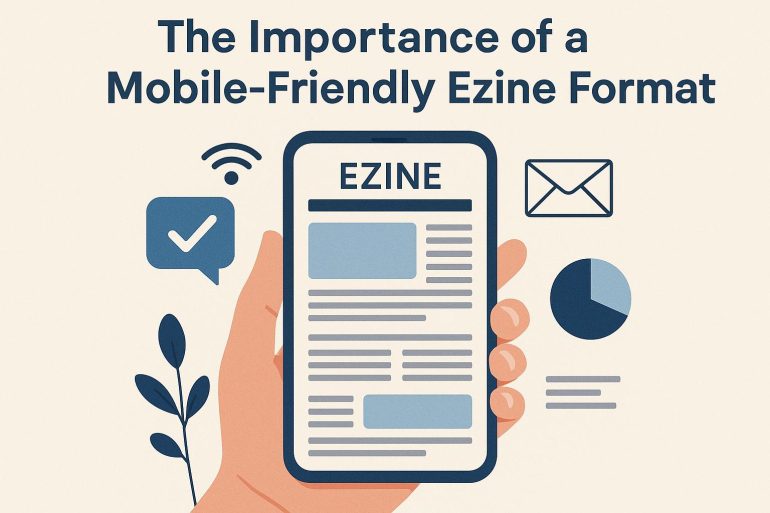
In recent years, there has been a significant shift in how individuals consume digital content. The rise in mobile phone usage, which surpassed desktop usage as early as 2016, underscores the imperative of optimizing digital content for mobile platforms. This trend extends to ezines, which must now be accessible and user-friendly on smartphones and tablets.
Enhanced User Experience
A mobile-friendly ezine format is crucial for providing an optimal experience to readers. With the reduced screen sizes of mobile devices, it is important to ensure that text is legible, images are appropriately scaled, and navigation is intuitive. A well-designed mobile layout can enhance readability and engagement, preventing potential subscribers from abandoning an ezine due to poor usability.
User Interface and Design
The user interface (UI) design plays an integral role in maximizing a mobile-friendly experience. Creating an intuitive, seamless UI is essential to engaging users who rely heavily on mobile devices. Attention to detail is key, from font size, typeface, and color schemes to the spacing between text and interactive elements. The typography should ensure that words are clear and easy to read, even on the smallest of screens, while intuitive navigation patterns facilitate ease of use.
Technical Considerations
To achieve a seamless mobile experience, publishers should implement responsive design principles. This involves using flexible grids, scalable images, and CSS media queries to adapt the layout based on the device’s screen size and orientation. Additionally, minimizing load times by optimizing multimedia content and leveraging browser caching techniques enhances performance and user satisfaction.
Mobile devices often operate under varied network conditions, making it imperative that content is delivered promptly. Techniques such as image compression, use of Content Delivery Networks (CDNs), and lazy loading for images can significantly reduce load times and improve the overall user experience.
Improved Reach and Accessibility
A mobile-optimized ezine can significantly broaden its audience by reaching individuals who primarily use mobile devices for internet access. Ensuring accessibility to all users, including those with disabilities, is also critical. This can be achieved by adhering to web accessibility guidelines, which include providing alternative text for images, ensuring adequate color contrast, and enabling keyboard navigation.
For readers using screen readers or other assistive technologies, well-structured, semantic HTML and ARIA roles can make content more accessible. Providing captions for videos and ensuring that links are descriptive are other important aspects of accessibility that should be considered.
Content Adaptation
Adapting content specifically for mobile consumption can enhance user engagement as well. This means creating concise, scannable content that aligns with the way individuals interact with their phones or tablets. Ensuring that key information is available without excessive scrolling or zooming can enhance the mobile reading experience.
Content such as videos, images, and other multimedia should be optimized for mobile devices, ensuring they do not slow down the mobile browsing experience. Text overlays on images need to be clear, and video content must be compatible with touch-based controls.
SEO Benefits
Search engines prioritize websites and online publications that offer a superior mobile experience. Google, in particular, uses mobile-first indexing, which means it predominantly uses the mobile version of the content for indexing and ranking. Therefore, a mobile-friendly ezine format not only improves user experience but also enhances search engine visibility, potentially attracting more readers.
Another benefit of optimizing for mobile is the increase in organic traffic that can result from a higher ranking in search engine results. This can also improve the retention rate of readers who discover content through organic searches.
The Role of Analytics
Understanding how users interact with mobile content is critical for ongoing optimization. Analytics tools can provide insights into user behavior, such as time spent on page, interaction with elements, and drop-off points. This data can be leveraged to make data-driven improvements to both content and site layout, continuously refining the mobile user experience.
Additionally, engagement metrics serve as feedback mechanisms to assess the effectiveness of the current mobile strategy. They can guide content strategies, helping to better tailor future issues to audience preferences.
Overall, adapting ezines to a mobile-friendly format ensures publishers meet changing consumer behavior and technological trends. As more individuals access content via smartphones and tablets, the shift towards mobile optimization becomes not just beneficial but necessary. For more information on creating responsive designs, visit these resources on Smashing Magazine or explore CSS-Tricks.
The move towards mobile is not just a trend; it represents a fundamental change in digital consumption habits. Publishers who embrace this change will be poised to capture a growing segment of the audience that values convenience, accessibility, and efficiency. As mobile technology continues to evolve, staying ahead of these trends will be critical in maintaining relevance and engagement in the digital content space.